
Table of Contents
- 1 Introduction:
- 2 What Is Ho'oponopono Healing?
- 3 How to Practice Ho'oponopono for Healing:
- 4 Step 1: Choose What You Want to Heal:
- 5 Step 2: Sit Quietly and Breathe:
- 6 Step 3: Repeat the Ho'oponopono Mantra
- 7 Step 4: Take Full Responsibility:
- 8 Step 5: Practice Daily:
- 9 Benefits of Ho'oponopono Healing:
- 10 Ho'oponopono for Relationship Healing:
- 11 Why Ho'oponopono Works (Science + Spirituality):
- 12 How Long Does Ho'oponopono Take to Work?
- 13 Final Thoughts:
- 14 Recommended Books:
- 15 “Forgiveness is not an occasional act — it is a permanent attitude.” – Martin Luther King Jr.
- 16 “When I let go of what I am, I become what I might be.” – Lao Tzu
- 17 Manifest Mi Dreams - Team
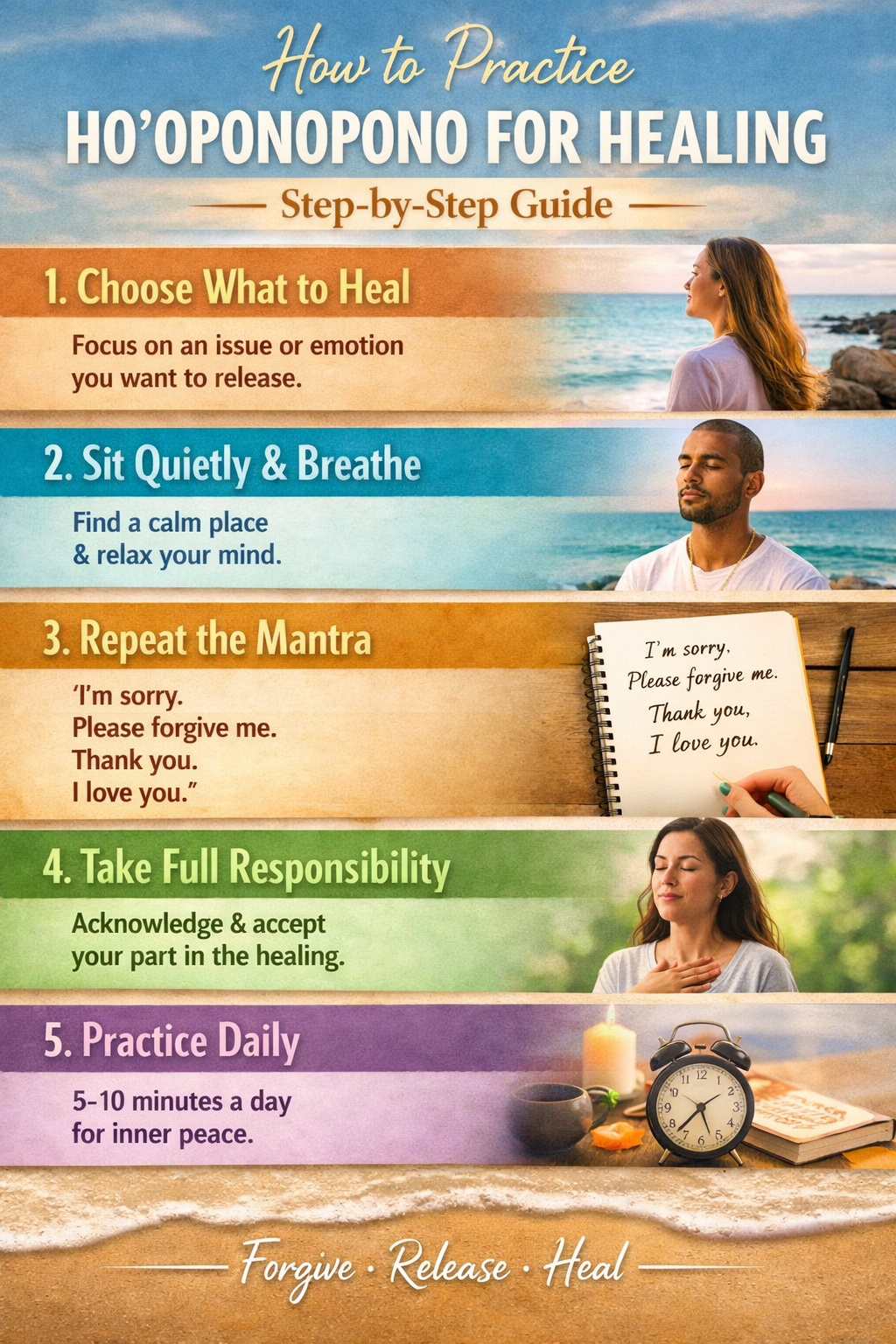
Image by: Manifest Mi Dreams
Introduction:
Ho’oponopono is a powerful Hawaiian healing technique that focuses on forgiveness, emotional cleansing, and inner peace. By practicing Ho’oponopono regularly, you can release emotional pain, heal relationships, and reprogram the subconscious mind.
What Is Ho'oponopono Healing?
Ho’oponopono healing is a spiritual and emotional healing practice rooted in ancient Hawaiian wisdom. It works on the principle that everything we experience in life originates within us, and healing begins with self-responsibility and forgiveness.
The practice uses a simple yet profound mantra to clear emotional blockages stored in the subconscious mind.
How to Practice Ho'oponopono for Healing:
Step 1: Choose What You Want to Heal:
Identify a situation, person, emotion, or memory causing stress, pain, or resentment. It can be:
- Relationship issues
- Childhood wounds
- Financial stress
Fear, guilt, anger, or anxiety
Step 2: Sit Quietly and Breathe:
Find a calm place. Close your eyes and take slow, deep breaths. Allow your body and mind to relax.
Step 3: Repeat the Ho'oponopono Mantra
Gently repeat the four healing phrases, either aloud or silently:
I’m sorry.
Please forgive me.
Thank you.
I love you.
Say them with intention — not force. You are speaking to your inner self and subconscious mind.
Step 4: Take Full Responsibility:
You are not blaming yourself. You are acknowledging that healing begins within you. This acceptance dissolves emotional resistance and brings peace.
Step 5: Practice Daily:
Practice Ho’oponopono:
- 5–10 minutes daily
- Before sleep
- During emotional triggers
- While journaling
Consistency deepens healing.
Benefits of Ho'oponopono Healing:
- Emotional Healing & Stress Relief
Ho’oponopono helps release stored emotional pain, trauma, and stress by cleansing the subconscious mind.
2. Improved Relationships
By practicing forgiveness internally, external relationships often heal naturally without confrontation.
3. Inner Peace & Mental Clarity
Regular Ho’oponopono meditation calms the nervous system and reduces overthinking.
4. Subconscious Mind Cleansing
This practice clears limiting beliefs, negative memories, and emotional blocks at a deep level.
5. Spiritual Growth & Self-Awareness
Ho’oponopono strengthens self-connection, compassion, and emotional maturity.
Ho'oponopono for Relationship Healing:
One of the most powerful uses of Ho’oponopono is relationship healing. You do not need the other person’s presence or apology. As you heal internally, emotional triggers dissolve and harmony often returns naturally.
How to Practise:
I’m sorry (Name of the Person)
Please forgive me (Name of the Person)
Thank you (Name of the Person)
I love you (Name of the Person)
Say them with intention — not force.
Why Ho'oponopono Works (Science + Spirituality):
Modern psychology supports forgiveness as a tool for:
- Lower cortisol levels
- Improved emotional regulation
- Better mental health
Spiritually, Ho’oponopono clears emotional energy, creating alignment between mind, body, and soul.
How Long Does Ho'oponopono Take to Work?
Some people experience relief immediately, while others notice changes over weeks. Healing depends on:
- Emotional depth
- Consistency
- Openness to forgiveness
There is no “right time” — only progress.
Final Thoughts:
Ho’oponopono healing is a gentle yet deeply transformative practice. By choosing forgiveness, responsibility, and love, you allow emotional wounds to heal naturally. When practiced daily, Ho’oponopono becomes a lifelong tool for inner peace, clarity, and spiritual growth.
Recommended Books:
- Ho’oponopono: The Hawaiian Ritual of Forgiveness by Ulrich E. Duprée
A practical, step-by-step guide to the ancient Hawaiian method of forgiveness and reconciliation. This book shares powerful exercises and contemplations to apply Ho’oponopono in everyday life — from relationships to personal healing. - Zero Limits by Joe Vitale & Dr. Ihaleakala Hew Len
One of the most popular modern books on Ho’oponopono, this title explains the concept of taking 100 % responsibility for everything in your life — even perceived external problems — as a path to healing and transformation. It also shares the astonishing story of Dr. Hew Len’s work with patients at a psychiatric ward through Ho’oponopono alone. - The Book of Ho’oponopono: The Hawaiian Practice of Forgiveness and Healing by Luc Bodin, Nathalie Bodin Lamboy & Jean Graciet
A compassionate and accessible guide that blends modern science (like epigenetics and consciousness studies) with Ho’oponopono’s traditional wisdom to help cleanse negative memories and break free from old patterns. - Mastering Ho’oponopono by Ravi Gautam
Great for beginners, this book offers clear, simple methods to apply Ho’oponopono for emotional healing, letting go of past pain, and cultivating inner peace. It’s focused on practical steps and daily practice. - Ho’oponopono for Healers, Therapists, and Coaches by Rian W. Pelati
Ideal if you’re a coach, therapist, or healer (or aspiring to be one) who wants to integrate Ho’oponopono into your work with clients. It includes real session examples and methods for facilitating emotional reconciliation. - The Art of Ho’oponopono and Forgiveness: A Practical Handbook by Dr. Ankita Kashyap & Prof. Krishna N. Sharma
A compact yet insightful manual on forgiveness and Ho’oponopono techniques with practical suggestions for daily life integration.